
House Of Jack casino Plinko game
Introduction
Plinko at House of jack casino is one of those rare casino games that looks almost self-explanatory at first glance, yet becomes far more nuanced once you actually start playing. You drop a ball from the top of the board, it bounces through a field of pegs, and eventually lands in a slot with a set multiplier. That is the whole visual concept. But the real player experience is shaped by something less obvious: risk settings, board size, hit distribution, session tempo, and the psychological pull of chasing rare top-end multipliers.
I have spent enough time with Plinko-style formats to say this clearly: the simplicity of the interface can be misleading. Many players expect a casual, low-effort diversion because the game has no reels, paylines, symbols, or House Of Jack Casino bonus overview for players rounds in the usual slot sense. In practice, Plinko can feel more intense than a standard online slot precisely because every drop is stripped down to a single visible outcome. There is very little decorative noise. You see the stake, you choose the risk level, you watch the path, and you get the result.
For Australian players looking at House of jack casino Plinko, the key question is not whether the game is easy to understand. It is. The real question is whether its style of randomness, pace, and reward structure matches the kind of session you actually enjoy. That is what I want to unpack here: how Plinko works, what makes it appealing, where the risk really sits, and why this format can either become a favourite quick-play option or lose its appeal surprisingly fast.
What Plinko is and why it attracts so much attention
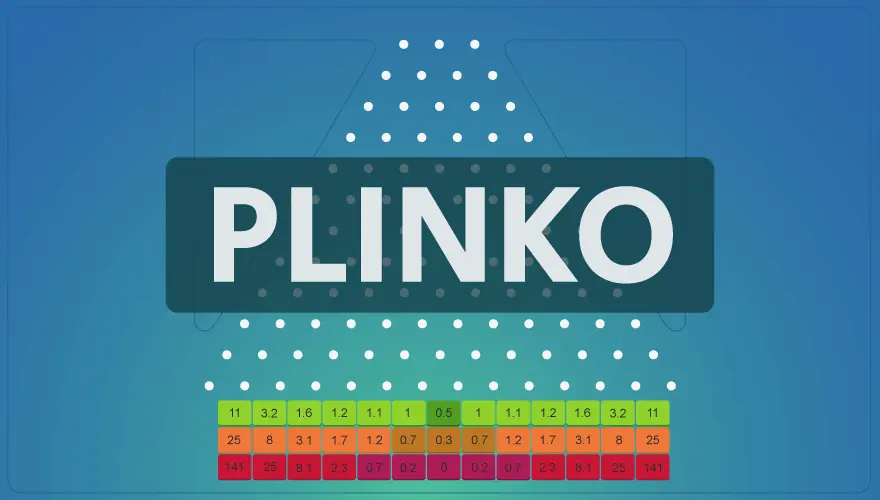
Plinko is a chance-based casino game built around a vertical board filled with pins. A ball is released from the top and deflects left or right as it hits each peg. At the bottom, there are multiple payout zones, each tied to a multiplier. Lower-value outcomes usually sit closer to the centre, while the largest multipliers are placed at the far edges, where the ball lands less often.
That visual structure explains a lot about why the game stands out. Unlike slots, where the determining logic is hidden behind spinning reels and an RNG-driven result reveal, Plinko gives players a visible journey. The path is not actually predictable in any practical sense, but it feels tangible. You are not just waiting for symbols to settle. You are watching a sequence unfold in front of you, and that creates a very specific kind of tension.
There is another reason Plinko became so noticeable across modern casino platforms. It fits current player habits. Sessions are often shorter, stakes are adjusted quickly, and many users prefer formats that give immediate feedback without multiple menus or layered features. Plinko answers that demand almost perfectly. One click, one drop, one result.
What makes Houseofjack casino Plinko worth discussing is not that it reinvents the genre, but that this style of game rewards understanding. A player who treats it as a simple novelty can burn through a bankroll quickly. A player who understands the relationship between board setup, risk profile, and expected streakiness will have a much clearer idea of what the game is actually offering.
How the Plinko mechanics work in real play
The core mechanics are easy to describe, but the practical impact of each setting matters far more than the basic explanation. In most Plinko versions, including the format players expect at House of jack casino, you usually control three main variables:
- Bet size — the amount staked on each drop.
- Risk level — commonly low, medium, or high.
- Rows — the number of peg layers the ball travels through.
Once those are set, the ball is released. As it hits each peg, it is diverted left or right. The final landing slot determines the multiplier applied to the stake. On paper, that sounds almost too simple to deserve analysis. In reality, these settings dramatically change the character of the session.
The number of rows affects how wide the payout distribution becomes. More rows usually mean more possible final positions and a broader spread between common low multipliers and rare high multipliers. Fewer rows often create a tighter board with less dramatic extremes. If you want a session that feels more stable, row count matters. If you want the possibility of a standout hit, row count matters just as much.
Risk level is even more important. On low risk, the multiplier map is usually flatter. You tend to see more outcomes clustered around modest returns, with fewer brutal dead zones and smaller top-end prizes. On high risk, the opposite happens. The centre can become much less forgiving, and the edge multipliers can rise sharply. That means the board looks similar, but the emotional experience changes completely.
One of the most useful ways to understand Plinko is this: you are not choosing a strategy in the traditional sense, because you cannot control the ball after release. You are choosing the shape of variance before the drop happens. That is a crucial distinction. The game gives you setup control, not outcome control.
| Setting | What it changes | What it means in practice |
|---|---|---|
| Bet size | Total exposure per drop | Directly affects how fast your balance rises or falls |
| Risk level | Distribution of multipliers | Changes how swingy or steady the session feels |
| Rows | Board depth and payout spread | Influences frequency of central outcomes versus rare edge hits |
Why the game feels fast, tense, and unusually watchable
Plinko has a very distinct rhythm. There is no spin animation in the slot sense, no card-dealing sequence, and no long reveal cycle. The action starts immediately after the drop. That creates a compressed loop of anticipation and resolution, which is one reason the game can be hard to put down.
In practical terms, the session pace depends on how you play it. Manual drops with occasional setting changes can feel measured and controlled. Auto-play, especially at small stake sizes, turns Plinko into a rapid-fire stream of outcomes. This is where the game starts to reveal both its strength and its danger. It is highly efficient. There is very little friction between one result and the next.
A detail many players underestimate is how much the visible bounce path affects engagement. Even though each drop is still governed by chance, the ball’s movement creates the illusion of near-misses and last-second turns in a way that feels more personal than a reel stop. When the ball drifts toward a high multiplier and then kicks back toward the middle, it leaves a stronger impression than a slot result that simply fails to connect.
That visible path is one of Plinko’s smartest design features. It transforms a mathematically simple event into a moment with narrative shape. You are not just seeing an outcome. You are seeing how close it looked. And that matters, because it can amplify excitement while also encouraging players to keep going longer than they planned.
My own observation is that Plinko often feels less like a traditional casino product and more like a probability simulator dressed as entertainment. That is not a criticism. In fact, it is part of the appeal. But it explains why some players find it fascinating while others find it repetitive after twenty minutes.
Risk levels, probabilities, and what players need to understand before starting
If there is one area where players should slow down before launching Plinko, it is this one. The game looks transparent because the board is visible. But visibility is not the same as predictability.
The probability structure of Plinko is built around distribution. Central landing zones are generally more likely because there are more possible left-right paths that lead there. Edge slots are rarer because fewer path combinations reach them. That is why the biggest multipliers are usually placed at the extremes. They need to be rare, otherwise the math would not hold.
What this means for a real-money session is straightforward:
- You should expect ordinary outcomes far more often than standout ones.
- High multipliers are designed to be infrequent, not “due.”
- Changing to high risk does not improve your odds of landing a premium result; it changes the payout curve and usually makes the session more unstable.
This is where some players misread the format. Because the board is visible and the ball physically moves, there is a temptation to believe patterns are forming. A few centre hits in a row can make the edges feel overdue. A near-miss can make a top multiplier seem close. But Plinko does not work like a timing game. The path may be animated, yet the underlying result logic remains chance-driven.
At House of jack casino, anyone trying Plinko should treat the risk setting as the most important decision on the screen. Low risk is usually better for players who want longer sessions and fewer extreme swings. High risk is more suitable for players who are specifically chasing larger multipliers and accept that many drops may return little or less than the stake.
There is also a bankroll management angle here that should not be ignored. Because each round is quick and visually clean, it is easy to underestimate how many drops you have made in a short period. A slot with long feature sequences naturally slows you down. Plinko often does the opposite.
How Plinko compares with slots and other casino games
Plinko sits in an unusual position within the wider casino catalogue. It shares some DNA with slots because outcomes are random and multipliers define the return potential. But the actual feel of the game is very different.
Classic online slots rely on themes, symbol combinations, feature rounds, and layered event triggers. Their appeal often comes from progression: base spins, teasing scatters, House Of Jack Casino free spins review, expanding wilds, bonus pick rounds. Plinko strips all of that away. There is no story arc. Every drop is self-contained.
Compared with House Of Jack Casino roulette overview for players, Plinko has a similar one-result-per-round clarity, but the visual presentation is more kinetic. Compared with crash games, it offers less decision pressure during the round itself, because you do not need to cash out at a chosen moment. Compared with blackjack or baccarat, there is no tactical framework at all. Your role is setup, not intervention.
| Game type | Main player appeal | How Plinko differs |
|---|---|---|
| Slots | Features, themes, bonus rounds | Far simpler, faster, and less layered |
| Roulette | Clear bets and single outcomes | More visual motion and configurable variance |
| Crash games | Cash-out timing and tension | No in-round decision-making once the drop begins |
| Blackjack | Player choices and table logic | Almost entirely about probability distribution, not tactical play |
This difference matters because it shapes expectations. If you want a rich feature set and evolving round structure, Plinko may feel too bare. If you want instant feedback and a cleaner cause-and-effect loop between settings and outcomes, it can be far more satisfying than a standard slot.
Where the practical strengths of Plinko really are
The strongest point of Plinko is clarity. You do not need to learn paylines, symbol values, buy features, or bonus conditions. The setup is visible, the stake is visible, and the result is immediate. For many players, especially those who dislike bloated slot interfaces, that simplicity is not a limitation. It is the reason the format works.
Another strength is adjustable session character. By changing rows and risk level, you can shift the game from relatively steady to aggressively swingy without changing to a different title. That gives Plinko more flexibility than it first appears to have.
I would also highlight its honesty of presentation. Plinko does not pretend to be a strategic contest. It shows you a board, offers a payout map, and lets chance do the rest. In a market full of heavily themed products designed to disguise variance behind spectacle, that directness is refreshing.
One memorable thing about Plinko is that a session can produce stronger emotional spikes from very small stakes than many more elaborate games. A tiny ball drifting toward an edge multiplier can create more suspense than a full bonus animation. That is a surprisingly efficient use of design. The full picture of payment methods lives in House Of Jack Casino Aviator crash game help, including the less common ones.
Its limitations and the less flattering side of the format
Plinko is not for everyone, and its weaknesses become obvious fairly quickly if your preferences lean in another direction. The first limitation is repetition. Since every round follows the same basic structure, the game depends heavily on your tolerance for pure outcome-based play. If you need evolving features or changing objectives, Plinko may feel one-note.
The second issue is pace-related exposure. Because rounds resolve quickly, bankroll drain can happen faster than players expect, especially on high risk or with auto-play enabled. This is not unique to Plinko, but the stripped-down interface reduces the natural pauses that sometimes help players slow themselves down.
There is also a psychological trap in the presentation of rare multipliers. The board makes those edge results visible at all times. That can make them feel more accessible than they really are. In practice, they remain rare outcomes. Seeing them on screen does not make them meaningfully closer.
Another observation worth making is that Plinko can create the illusion of “almost understanding” randomness. After enough drops, some players start feeling they can read the board’s mood. That is exactly when the format becomes dangerous, because familiarity can be mistaken for control.
Who Plinko suits best and who may prefer another format
In my view, Plinko is best suited to players who value quick rounds, transparent setup, and a direct relationship between variance settings and session behaviour. It also works well for users who enjoy observing probability in action rather than waiting for bonus features to trigger.
This format may be a good fit if you:
- prefer fast, low-friction gameplay;
- want a simple interface with little learning curve;
- are comfortable with chance-driven results and limited interactivity;
- like adjusting risk levels to shape the tone of a session.
It may be a poor fit if you:
- play mainly for themed entertainment and feature depth;
- expect strategic decision-making during rounds;
- get frustrated by repeated low or middling outcomes while chasing rare top-end results;
- prefer slower games that naturally moderate your spending pace.
For some Australian players at House of jack casino, Plinko will feel like an ideal short-session option: easy to launch, easy to understand, and capable of delivering sharp moments of tension. For others, it will seem too exposed, too repetitive, or too dependent on distribution swings rather than layered gameplay.
What to check before launching House of jack casino Plinko
Before starting a session, I recommend paying attention to a few practical points rather than jumping in based on the game’s simple appearance.
- Check the risk setting first. This choice will shape the entire session more than most new players expect.
- Look at the multiplier layout. Do not focus only on the highest number. Notice how much of the board is occupied by modest returns.
- Set a drop budget, not just a money budget. Because rounds are so fast, limiting the number of drops can be more effective than thinking only in currency terms.
- Use demo play if available. It helps you feel the rhythm of different configurations without immediate financial pressure.
- Be realistic about streaks. A sequence of average results is normal, not a signal that a major hit is approaching.
That last point matters more than it sounds. Plinko often invites emotional overreaction because each round is visually compact and easy to judge. A few disappointing drops can trigger unnecessary stake increases. A few lucky hits can create false confidence. Neither response improves the mathematics of the next drop.
Final verdict on House of jack casino Plinko
House of jack casino Plinko offers a very specific kind of casino experience: fast, stripped back, visually clear, and heavily driven by how you choose to configure variance. Its biggest strength is that it does not hide what it is. You set the stake, choose the risk profile, release the ball, and accept the result. For players who appreciate directness, that is a genuine advantage. Players who value quick withdrawals will find real timings in House Of Jack Casino crash betting game guide.
The game works best when approached with realistic expectations. Plinko is not a strategy title, not a feature-rich slot alternative, and not a guaranteed path to frequent big multipliers. What it does offer is a clean probability-based format where tension comes from visible movement and sharply defined outcomes. That can be highly engaging, especially in short sessions.
The caution point is equally clear. The speed of play, combined with the constant visibility of rare premium outcomes, can encourage chasing behaviour if you are not disciplined. High-risk settings may look exciting, but they can turn a session volatile very quickly. Anyone trying Plinko at House of jack casino should understand that the simplicity of the interface does not reduce the importance of bankroll control.
My overall view is straightforward. Plinko is worth trying if you want immediate gameplay, minimal clutter, and a format where setup choices directly affect the feel of the session. It may not suit players who want narrative features, tactical depth, or slower pacing. But for the right audience, it delivers something many casino products do not: a concise, transparent, and surprisingly tense experience built from a very simple idea.
FAQ
How does Plinko work in the casino lobby?
A ball is released from the selected point and falls through pegs into a scoring grid. Each landing area is linked to a multiplier, and the game updates the result instantly for real-money play.
What should be checked before starting a Plinko round with real money at House Of Jack?
Confirm the bet amount and the selected launch position before pressing play. The game outcome depends on the multiplier grid, so reviewing the current risk level shown for the session is recommended.
Where can the Plinko section be located on the official site?
Open the casino games area, then use the game lobby search or category filter to find Plinko. Game listings usually show the current mode, including demo mode and real-money play options.
How do bet size and the launch position influence risk in Plinko?
Bet size affects how much is gained or lost when the ball lands under a multiplier. Launch position can change which parts of the grid the ball is more likely to reach, so it directly affects the practical risk profile of each drop.
When using a promo code or bonus offer, does it apply to Plinko multipliers automatically?
Bonus eligibility depends on the current promo terms shown in the bonus section and how that offer is activated on the account. Some bonuses require meeting specific conditions before gameplay counts, so checking the bonus rules before starting Plinko is essential.
What common beginner mistake leads to unexpected losses in Plinko?
Choosing a higher bet amount and then changing it mid-session without confirming the game panel can lead to surprises. Keeping decisions consistent, confirming the launch spot and bet before each ball drop, and avoiding rapid repeated starts helps maintain control.